
Hidden Valley
34.0122° N, 116.1686° W
A boulder-ringed bowl that blocks what little light pollution reaches it from the west. The classic first stop, and the one most people remember.
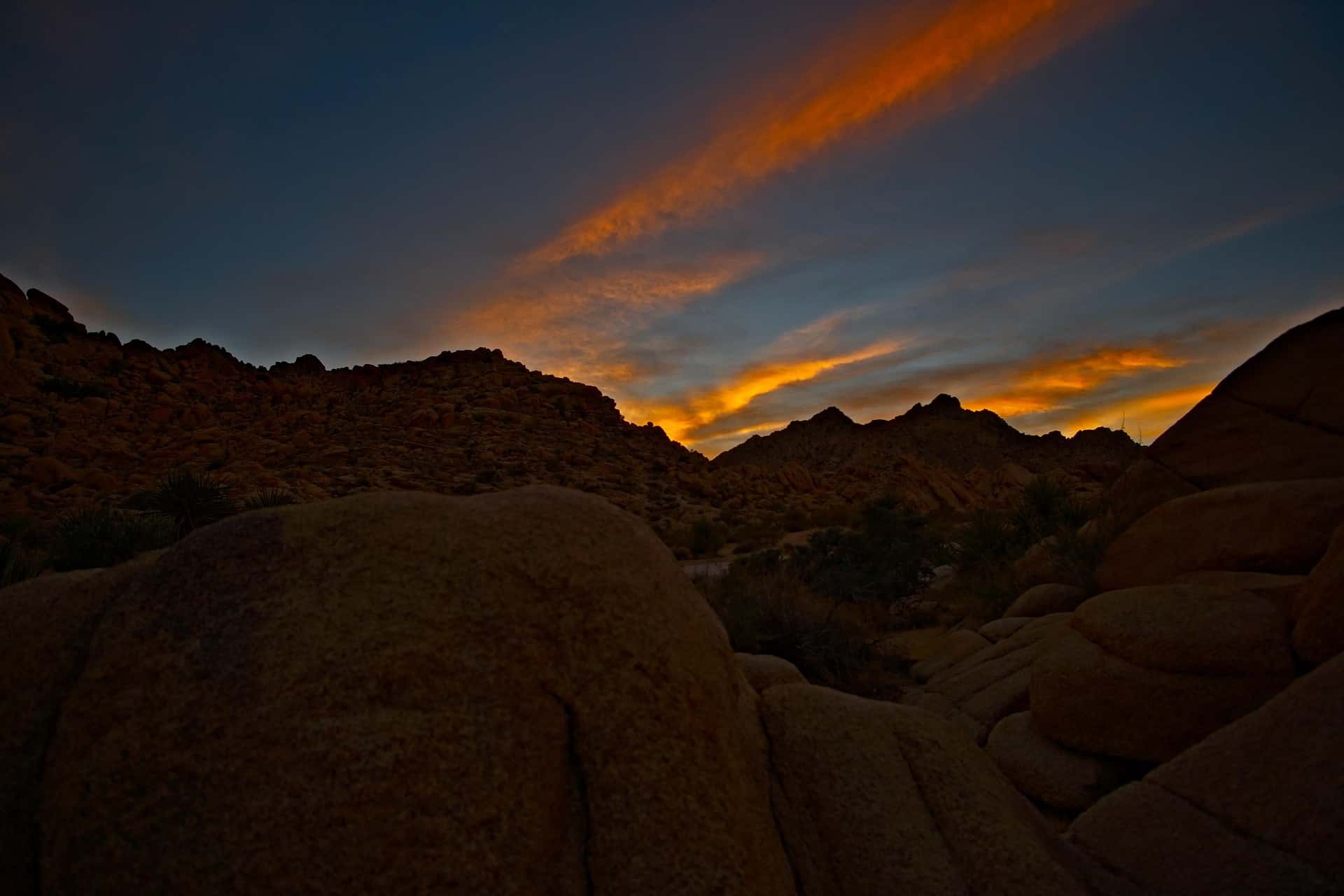
The Joshua Tree desert sits at the seam where the Mojave and Colorado deserts meet. The air is dry, the elevation is high, and the nearest serious light domes — Palm Springs to the south, the Los Angeles basin far to the west — are blocked or blunted by the mountains.
The Joshua Tree region is known for wide horizons, dry desert air and access to darker skies beyond the surrounding communities. On clear moonless nights, the Milky Way can be clearly visible from these dark sky locations.
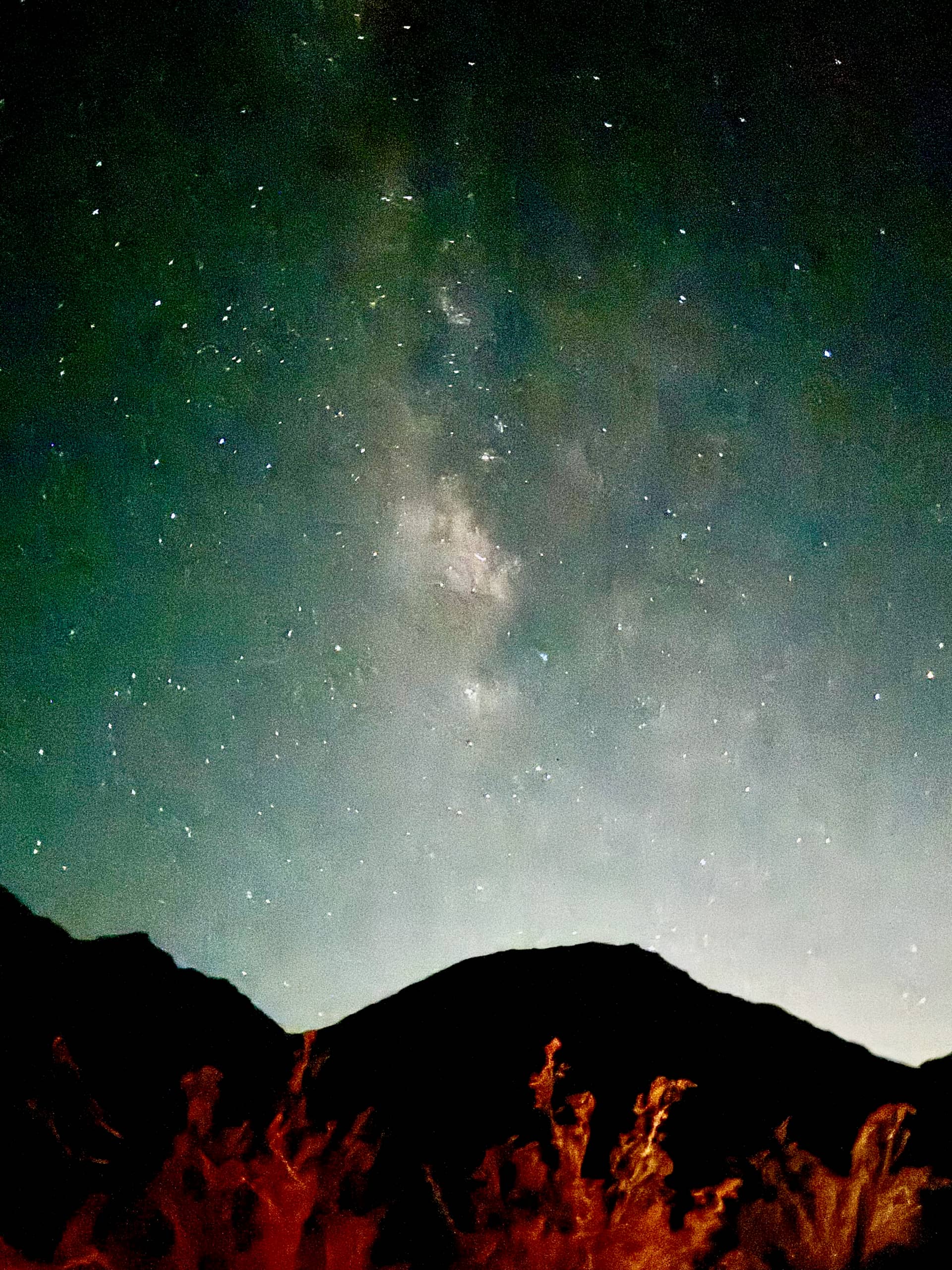
Bortle 3 · Joshua Tree, California
The galactic core clears the horizon from late spring through early autumn.
All are in the Joshua Tree desert and reachable on paved or well-graded roads. Check access hours and conditions before you set out.
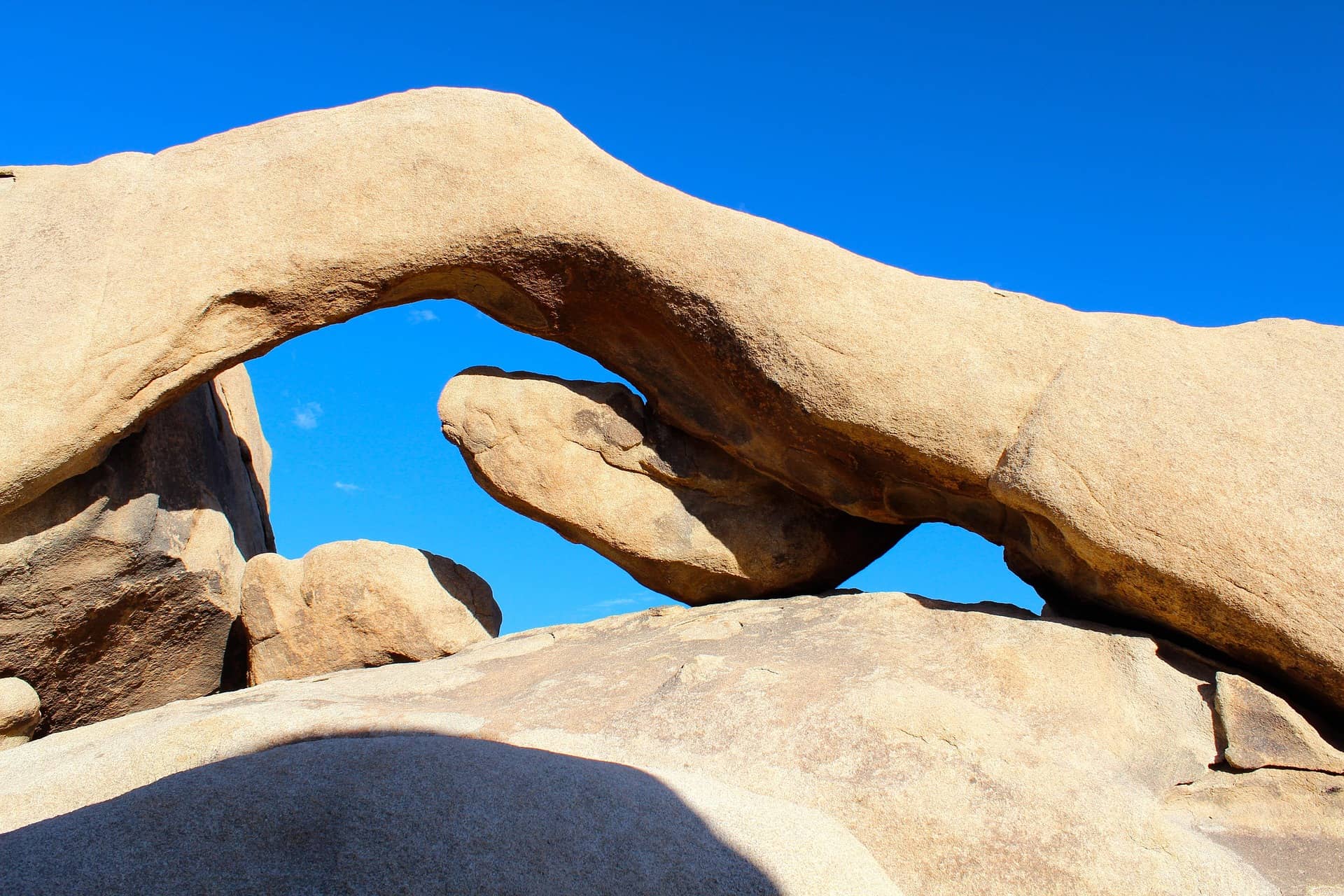
34.0122° N, 116.1686° W
A boulder-ringed bowl that blocks what little light pollution reaches it from the west. The classic first stop, and the one most people remember.
34.0028° N, 116.1614° W
Flat, open, and easy to reach after dark, with plenty of room to set up and a horizon low enough to catch the Milky Way core rising in summer.
33.9264° N, 116.1867° W
Five thousand feet up, looking down the Coachella Valley. The valley glow sits below you, which makes the sky overhead feel enormous.
33.9942° N, 116.0631° W
Further out and correspondingly darker. Popular with astrophotographers who want granite in the foreground.
33.7378° N, 115.8136° W
The far southern end, and the darkest measured sky in the region. Worth the drive on a moonless night in winter.
33.9861° N, 116.1364° W
Central, high, and exposed. Good for tracking the Moon low in the sky when the terminator is at its most dramatic.
Full dark adaptation takes about half an hour, and a single glance at a phone screen undoes most of it. Use a red light or none at all.
For the Milky Way you want a new moon. For crater hunting you want the opposite: a first or last quarter, when shadows are longest along the terminator.
A steady pair of 10x50 binoculars can reveal the Moon’s major seas, mountain ranges and bright ray systems.
A 95°F afternoon can fall to 45°F by 2am. Bring far more layers than feels reasonable when you set off.
From roughly May to September the galactic core rises in the southeast after dark: a mottled band of dust lanes and star clouds, obvious to the naked eye, spectacular through binoculars.
At first and last quarter the terminator cuts the disc in half and every crater along it stands up in shadow. This is when your dedicated crater looks its best.
Jupiter’s moons, Saturn’s rings, the Pleiades, the Orion Nebula in winter, and on a good August night, Perseid meteors two or three a minute.
A photograph fades into a camera roll. A named crater sits in the sky above the desert for the rest of your life, and hangs on your wall in the meantime.
